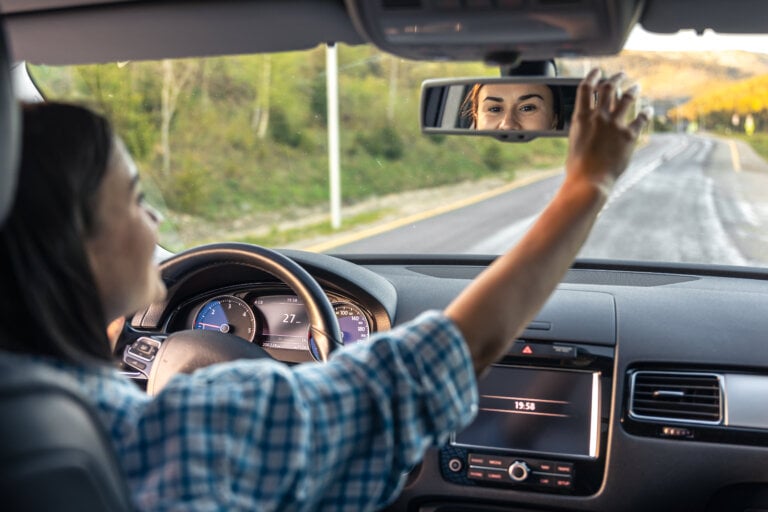


The descent from the mountainous Bajos del Toro or Monteverde Cloud Forest Reserve is nothing short of majestic, unfolding in a sweeping panorama of lush forests and misty valleys. But halfway down the steep and winding grade, a subtle shift catches your attention: the brake pedal feels different, it’s too soft and slightly spongy beneath your foot. This is followed moments later by a sharp, unmistakable smell of burning brakes drifting through the cabin.
Frightening moments like this can spike your heart rate instantly. When gravity takes over on Costa Rica’s daunting mountain passes, managing your descent speed requires more than just holding down the pedal.
As any seasoned driver in the country will tell you, descending steep terrain requires a completely different driving style and mindset. Road conditions change, and relying too heavily on your brakes on a long downhill stretch can quickly lead to overheating and reducing your stopping power, a possibly dangerous and unnecessary stress.
Before sitting behind the wheel of your Adobe rental car, let’s look at how to master engine braking, protect your vehicle’s components, reduce wear and tear, avoid brake failure, and keep your descent smooth, safe, and completely under control–under any driving conditions.
Key Elements
- Brake Fade – What is it and why does it happen?
- How to Prevent Brake Fade
- Using Hill Descent Control (HDC) in a 4×4
- What to do if the brakes have already overheated
- When to call Adobe’s 24/7 roadside assistance
- From Cloud Forests to Coastlines: Steep Routes That Test Your Brakes
Brake Fade – What is it and why does it happen?

Brake fade occurs when the material on your brake pads overheats from overuse, losing its ability to generate the friction needed to slow the vehicle down.
When drivers ride their brakes for long distances instead of using the lower gears for engine braking, meaning heat rapidly builds up in the brake fluid and rotors, making the pedal feel spongy and dramatically reducing stopping power when it’s needed most.
This happens frequently in Costa Rica because of the country’s unique topography. Costa Rica’s interior is traversed by rugged mountain ranges accessed by steep and winding roads. These sustained mountain grades—long and sharp descents–sometimes lose thousands of feet of elevation over many miles.
How to Prevent Brake Fade
Understanding the different types of brake fade is essential for mountain driving. The two primary culprits are disc brakes and drum brakes fade, which occur when intense friction overheats the components. Extreme heat can also boil the hydraulic fluid, causing fluid fade—a dangerously spongy pedal that severely compromises your stopping power.

When should you use low gear on Costa Rica’s steep mountain roads? As much as possible! The golden rule to safe driving in Costa Rica is engine braking. Let your engine do the heavy lifting. Here is how to keep your brakes cool, safe, and fully responsive:
- Use Engine Braking (Downshifting): Shift your automatic or manual transmission into a lower gear (such as 2nd or L, or use manual/paddle shifters if available). How does engine braking work? Engine braking downhill forces the engine to fight against the vehicle’s momentum, naturally slowing you down without overworking the brake pads. This is similar to downshifting gears on a manual transmission.
- Brake Firmly and Intermittently: Instead of riding the brake pedal continuously—which traps heat in the system—apply firm, steady pressure to slow down when needed, then release the pedal completely to let airflow cool the rotors and pads.
- Keep Your Distance: Maintain a generous following distance from the vehicle in front of you. This gives you plenty of space to manage your speed naturally and keeps you from tapping or slamming your brakes constantly.
- Pull Over and Cool Down: If you notice a burning smell or the pedal feels spongy, pull over safely at a scenic overlook or on a wide shoulder. Give your vehicle 10 to 15 minutes to cool completely before continuing your descent.
Using Hill Descent Control (HDC) in a 4×4
Hill Descent Control (HDC) works as automatic engine braking for 4x4s. It makes navigating steep off-road drops and rugged mountain tracks significantly easier, as the vehicle’s computer automatically manages braking for you.
Here is how to use it correctly in a 4×4:
- Engage Low Range (4L) First: Most HDC systems require your vehicle to be in Four-Wheel Drive Low (4L). First, stop completely and shift your transfer case into 4L. Check your rental vehicle’s manual for detailed steps, as you may need to be in neutral or park to shift.
- Activate the HDC Button: Press the Hill Descent Control button on your dashboard or center console (usually marked with an icon of a car driving down a steep slope). An indicator light will illuminate on your dash.
- Keep Your Feet Off the Pedals: As you reach the top of the hill, lift your feet off both the accelerator and the brake pedals. The system will automatically use the brakes to keep you moving at a safe, slow walking speed. You can adjust this speed with your cruise control or steering wheel buttons.
- Steer and Monitor: Focus on steering around rocks, ruts, or obstacles. If you need to speed up or slow down a little, gently tap the accelerator or brake. The system will take control again once you let go.
- HDC Limitations: Hill Descent Control helps you drive slowly off-road at speeds under 20 km/h (12 mph). It is not a replacement for engine braking on long, paved mountain roads like those in Monteverde or Bajos del Toro. Avoid using Hill Descent Control at high speeds or for long highway descents, as this can cause the braking system to overheat.
- Step Verification: You will know the HDC is working when the vehicle slowly moves down the slope without you pressing the brake pedal. You will also hear a distinct buzzing or pulsing sound from the anti-lock braking system.
What to do if the brakes have already overheated
If you notice a sharp burning smell or a dangerously spongy pedal, your brakes have already overheated. Here is how to handle the situation safely:
- Pull Over Immediately: Locate a safe, wide shoulder, pullout, or scenic overlook where you won’t obstruct traffic. Park your vehicle and either keep the engine running for air circulation or turn it off safely. Make sure to engage the parking brake.
- Let Nature Do the Work: Step away and let ambient airflow naturally cool the brake pads, rotors, and fluid. Depending on how severe the overheating is, wait at least 15 to 20 minutes before continuing your journey.
- Never Pour Water on the Brakes: Avoid pouring cold water on hot brake rotors. Doing this can cause the metal to warp or crack due to sudden temperature changes. This can ruin your braking system and leave you stranded.
- Inspect and Test Before Moving: Once cooled, test the brake pedal gently while stationary. If it still feels soft or goes all the way to the floor, or if you notice strange grinding noises, do not drive further.
When to call Adobe’s 24/7 roadside assistance

If your brakes refuse to firm up after a long cooling period, or if you suspect mechanical damage, it is time to call in backup. Adobe Rent a Car’s Extended Protection Coverage (SPP) provides reliable 24/7 roadside assistance to ensure you are never stranded on a mountain pass.
Although our offices are not open 24 hours a day, Adobe representatives are always available to respond to an emergency.
If the incident occurs between 8:00 a.m. and 7:00 p.m., please call the central Adobe offices at tel. +(506)2542-4800. If the incident occurs before or after regular business hours, call the Adobe emergency number at tel. +(506)2542-4888.
- Save the Emergency Number: Save Adobe’s 24/7 support number in your phone or write it down in your rental packet before you leave the lot.
- Communicate Your Location: Share your exact coordinates, nearest kilometer marker, or notable landmarks so assistance can locate you quickly.
- Vehicle Replacement Support: If the vehicle has sustained brake damage or is unsafe to drive, Adobe will coordinate a prompt vehicle replacement or dispatch a technician to get you back on the road safely (additional fees may apply).
From Cloud Forests to Coastlines: Steep Routes That Test Your Brakes

- Route 32 (San José to Limón over the Braulio Carrillo): This area features thick fog, heavy trucks, and winding mountain curves with steep hills leading to the Caribbean lowlands or Central Valley. It’s crucial to control your speed here.
- The Inter-American Highway over Cerro de la Muerte (Route 2): This stretch spans over 3,300 meters (nearly 11,000 feet) and offers some of the country’s highest and most challenging driving conditions, often with dense fog. The steep descents toward Cartago and the San Isidro de El General Valley can be tough on vehicle brakes.
- Route 141 (Ciudad Quesada to Zarcero / Naranjo): Driving down Route 141 from the northern highlands to the Central Valley means going down steep hills. The winding mountain roads need your full attention.
- The Route to Monteverde (via San José / Las Juntas): Whether you take the newer paved route or the unpaved back roads up from the Pan-American Highway, getting to and from Monteverde involves steep climbs and descents. The grades can be particularly severe, testing both your vehicle’s suspension and braking systems.
- Route 160 / Coastal Mountain Passes to Nosara and Samara (Guanacaste): Guanacaste is mostly flat, but to reach some coastal areas, you’ll need to navigate steep mountain roads or ridges. This can be particularly challenging during or after the rainy season because loose gravel can make downhill paths even harder to manage.
Ready to explore Costa Rica’s breathtaking landscapes with total peace of mind? Book your reliable 4×4 rental with Adobe Rent a Car today and hit the mountain roads equipped for any adventure.
FAQ’S
Yes. To do it safely, respect speed limitations, shift into a lower gear (such as 2, L, or using manual/paddle shifters) to use engine braking, and apply firm, intermittent pressure on the brakes rather than riding the pedal continuously.
Does engine braking damage the engine and is engine braking bad for automatic transmissions? No, proper engine braking is not bad for your car; it simply uses the engine’s natural compression to control speed and protects your brakes from dangerous overheating.
When brakes overheat, they cause brake fade—resulting in a spongy pedal, a burning smell, and a dangerous loss of stopping power.
They smell like burning because continuous friction on a long descent overheats the brake pads and rotors, causing the friction material to break down and release smoke and odor.
No, it is not overly difficult, but it requires extra alertness due to narrow, winding mountain roads, a lack of street signs, fast-paced local driving habits, and changing weather conditions.
Ready for adventure? BOOK NOW!
Adobe Rent a Car is rated as one of the preferred car rental companies by tourists!